High Performance Health Podcast
Does HRT Actually Help You Build Muscle And Lose Visceral Fat? - Dr. Federica Amati
In this conversation, Dr. Federica Amati explains what her research found, where HRT may be helpful, and why it should be seen as one tool rather than the main driver of body composition.
AUDIO
TRANSCRIPT
[Angela Foster]
When you look at women who are taking menopause hormone therapy, I know that again this kind of comes back to how it interlinks with so many things, but have you seen those women have an easier time of gaining muscle, reducing visceral fat and overall body fat than the women who are not, or does that come down more to their diet and lifestyle changes and exercise?
[Dr. Federica Amati]
In our study, in our paper, it was cross-sectional as I said, so we didn't see whether it changed how they were able to maintain muscle mass or reduce visceral fat. What we did see is that women who were taking HRT had less of that change in post-strandal response, so they were, if you look at the different lines, they were closer to the pre-menopausal, so it was protective in that sense. However, my clinical experience is that HRT can really help with some of these symptoms, but it is not the key driver to maintaining muscle mass, bone mineral density and reducing visceral fat mass.
Lifestyle, exercise, nutrition, sleep is a much bigger driver. So I would say again, HRT is another tool in the toolbox, but it won't increase your muscle mass, decrease visceral fat by itself. In some women, it might give them enough sleep to have enough energy to do the exercise, move every day and again, knock on effect, but it's not the only tool that's going to help you with that.
I think here it's important to say that women who are listening to this, who are maybe in their 20s or 30s, early 40s, really putting as much effort in now to get used to resistance training, get used to moving your body every day, really focus on a high quality diet now, is going to give you so much more buffer when menopause hits. Because the issue is that, as we've discussed, menopause doesn't just suddenly mean everything falls off a cliff, but it becomes harder to build extra muscle. It's still doable, you can still do it, but it's harder.
So if you start off with a higher muscle mass, if you start off with the routine of eating and moving and sleeping in a certain way, when biology makes it a bit easier, then when the biology stops helping you so much, you're already in a better place. So that would be my message to the younger audience. And then if you're someone who's, and I've worked with many women who are in full-blown menopause, have been for like 10 years or more, and they have transformed their health, right?
So as I said, it's not like a blocker, but it's just, you have to work a bit harder after. So you can either help yourself, or if you're post-menopausal, there are so many things you can do to transform your health afterwards. And I want to just touch one last thing.
I know you said lifestyle medicine pillars are there and we should focus on them, but I really want to acknowledge something important, which again, I rarely see acknowledged and it's super important. They are technically free and available to us all, but in reality, we live in an obesogenic environment. So they are not that easy.
They're simple, but they're not easy to achieve. There's a reason why two thirds of the population in this country have overweight or obesity and are not in good metabolic health. Estimates sit at around one in three adults having incident resistance.
And that is because the way that our work life and our feed environment and all these things are set up is not for public health. It's to maximise profit. So whilst it sounds simple, we have to acknowledge that it's not easy for everybody.
The more access you have, the easier it is. And so there is this really big divide in those who are able to achieve this and those who find it really hard. So I want to say, if it feels like you have to put your mind to it, set some time aside and really put effort in, it's because it is.
It needs effort. Unfortunately, our environment isn't set up for it to be easy. And so we need to also be kind to ourselves and actually pat ourselves on the back.
If we're able to really start to build these lifestyle medicine pillars into our lives, using tools to help us along the way. So whether you use the Zoe app to help improve your nutrition, whether you're able to join a local walking group, whatever you're able to do, like, well done, because it's actually quite hard. And be kind to each other.
Because one of the narratives I see online a lot is like, it's easy. Just like set your alarm, like go to the gym. And it's like, yeah, cool.
If you have gym membership, and you don't have caring responsibilities, and you can afford to fill your fridge with healthy berries, like great. But actually, that's not the case for many people. So let's just celebrate our efforts.
The most important thing is trying, finding the tools that are available to you and making the most of those. And remember that time is the only currency that you cannot buy. So what you dedicate your time to as much as possible, really focus on where you can spend your time.
So if that means blocking out your calendar, or a half hour lunch break, do it. And I, you know, I think people are so scared to set time aside. And to actually say that I'm actually going to stop, I'm going to get up from my desk and go to my kitchen and make a salad, right?
We've got to do it. And us who are older, so you know, those of us who manage younger people, we have to set the example. So if you have a team, my team, I'm always like, go get a lunch break, get up and go for a walk, we have to set an example, because it's very easy to get sucked into this idea that we don't have time, we don't have time, we don't have time.
And for again, I want to say for some of us, it can be like that with carrying responsibilities, as I said, shift work, there's also lots of reasons why that might be the case. But where you can try to dedicate some time to looking after yourself, because it, as I said, you actually have to structure these lifestyle medicine pillars into your day, if you want to be able to achieve them. One of the biggest time steps we have in our current sort of lives is social media, right?
So an average adult spends two and a half to three hours on social media, just in little snippets across the day. Take that time back, not all of it, I'm on social media, I put content out, right? I'm not saying we're all going to go cold turkey, but just be mindful about your time, because time is precious.
And if you are able to slot it in to achieve the things that you want to for yourself, it makes a big difference, because it's that consistency that really pays off in the long term.
DESCRIPTION
Can HRT actually help women in midlife build muscle and reduce visceral fat — or is lifestyle still doing most of the heavy lifting? In this conversation, Dr. Federica Amati explains what her research found, where HRT may be helpful, and why it should be seen as one tool rather than the main driver of body composition.
She also explains why building muscle, eating well, moving regularly and protecting sleep before menopause can create a valuable buffer for later life. And for women already well into menopause, her message is equally important: meaningful change is still possible, but the fundamentals need to be built consistently into everyday life.
KEY TAKEAWAYS
HRT Is Not a Muscle-Building Shortcut — Dr. Amati says HRT alone will not increase muscle mass or reduce visceral fat.
HRT May Still Help Indirectly — Better symptom control and sleep can give women more energy to exercise and move regularly.
Lifestyle Remains the Biggest Driver — Exercise, nutrition, sleep and daily movement have a greater impact on muscle, bone and visceral fat.
Build Muscle Before Menopause If You Can — Going into menopause with more muscle and strong habits gives you a better starting point.
It Is Never Too Late — Women who are years into menopause can still transform their health.
VIDEO
VALUABLE RESOURCES
Click here for discounts on all the products I personally use and recommend
Want to go deeper? Start here:
💌 Fresh Start Sunday Newsletter
Your weekly 3-minute guide to creating the healthiest, most vibrant version of you.
Each Sunday, get one simple habit to boost energy, balance hormones, and enhance longevity - joined by 25,000+ women worldwide.
👉 https://angelafosterperformance.com/
🥗The Ultimate Guide to Creatine for Women -
👉 https://academy.angelafosterperformance.com/creatine-guide
⚡️ 10 Habits that Helped me reverse my Biological Age by 25 years in Perimenopause -
👉 https://academy.angelafosterperformance.com/10-habits-optin-page
Disclaimer: The High Performance Health Podcast is for general information purposes only and do not constitute the practice of professional or coaching advice and no client relationship is formed. The use of information on this podcast, or materials linked from this podcast is at the user's own risk. The content of this podcast is not intended to be a substitute for medical or other professional advice, diagnosis, or treatment. Users should seek the assistance of their medical doctor or other health care professional for before taking any steps to implement any of the items discussed in this podcast.
Recent Episodes
Professor Tim Spector - Perimenopause Mood Swings? Fix Your Gut First (3 Simple Steps)
Why Women Over 40 Shouldn't Skip Cardio (Even for Belly Fat) | Dr Alyssa Olenick
How much protein do you actually need to build muscle? | Eric Helms
Low Energy After 40? Why Hormones Aren't the Whole Story | Dr. Kien Vuu
About Angela
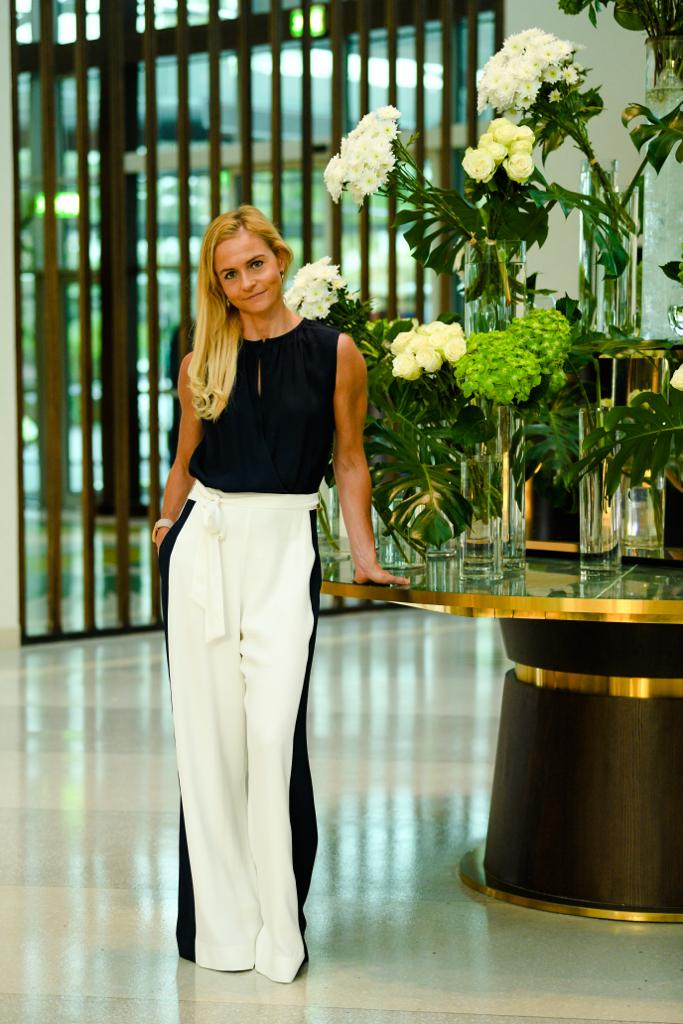
Angela Foster is an award winning Nutritionist, Health & Performance Coach, Keynote Speaker and Host of The High Performance Health Podcast.
A former corporate lawyer turned industry leader in biohacking and health optimisation for women, Angela regularly gives keynotes to large fitness, health and wellness events including the Health Optimisation summit, The Biohacker summit, Dragonfly live, Elevate Fitness conference and Gaia TV. She also delivers Health Optimisation and Performance Workshops to large multinational corporations and senior leaders with a strong focus on women’s health and burnout prevention.
Angela is also the creator of BioSyncing® a blueprint for high performing women who want to ditch burnout, harmonise their hormones and elevate their life.